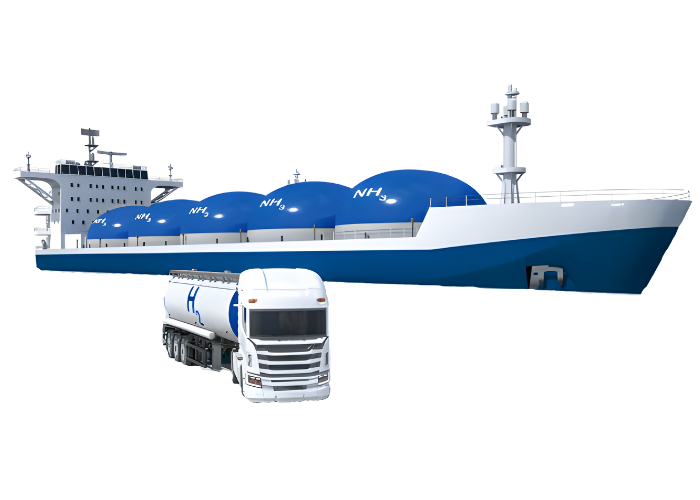
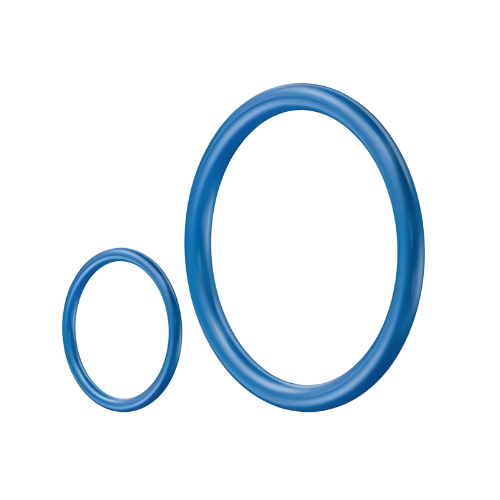
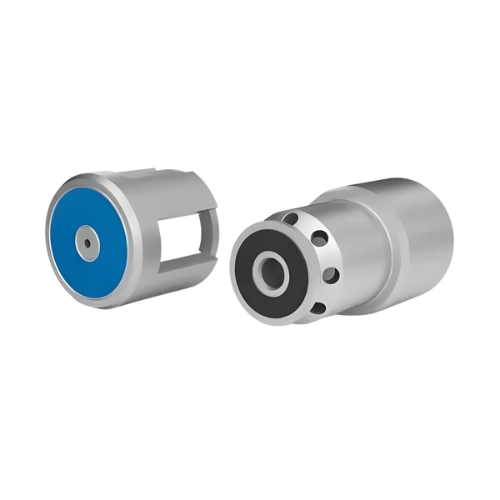
The energy transition requires safe and efficient methods to store and transport hydrogen. Where direct storage in gaseous form requires high pressure and low temperatures, chemical carriers such as ammonia, methanol, and LOHCs offer a more stable alternative. In these applications, Seals for hydrogen energy carriers largely determine the reliability of the system. Due to their role as a barrier between liquid, gas, and the environment, they must withstand extreme conditions and reactive substances. The right Seals for hydrogen energy carriers combine chemical resistance, low permeation, and mechanical stability to enable leak-free and durable transport.
Ammonia, methanol, and LOHC systems form the backbone of large-scale hydrogen logistics. However, these media are aggressive to conventional elastomers: they cause swelling, hardening, or even cracking. Therefore, Seals for hydrogen energy carriers must be carefully matched to the specific chemical environment. In ammonia systems, low-permeation compounds are required to prevent diffusion, while methanol imposes high demands on wear resistance and material purity. LOHCs additionally entail fluctuations in temperature and viscosity. Reliable Seals for hydrogen energy carriers maintain their tightness under all these conditions and prevent microleakage that would undermine safety and efficiency.
The material selection determines whether a seal withstands prolonged exposure to energy carriers. FKM is often used for high-pressure, chemically stressed systems, thanks to its excellent resistance to fuels and its low gas permeability. For the harshest conditions, FFKM Simriz® compounds are used; they offer near-universal chemical resistance and remain stable at temperatures up to 330 °C. EPDM is ideal in alkaline or humid environments and retains elasticity at lower temperatures. Silicones stand out for flexibility and suitability under cryogenic conditions. By combining these properties, Seals for hydrogen energy carriers provide a long-term stable seal, regardless of medium, pressure, or temperature.
Siliconen onderscheiden zich door flexibiliteit en inzetbaarheid bij cryogene condities. Door deze eigenschappen te combineren, leveren afdichtingen voor waterstof-energiedragers een langdurig stabiele afdichting, ongeacht medium, druk of temperatuur.
Hydrogen and its derivatives are particularly volatile. Even small imperfections in the sealing surface can lead to significant emissions. Therefore, seals for hydrogen energy carriers are designed with extremely low permeation. This is achieved through material densification, optimized filler combinations and precise compression in the groove. In high-pressure pipelines or tank connections, PTFE back-up rings are used to prevent extrusion.
The result is seals for hydrogen energy carriers that not only remain leak-tight under pressure, but also retain their compression set and resilience over thousands of cycles. This increases safety, reduces emissions and minimizes energy loss during storage or transport.
During filling or emptying of tanks, rapid pressure changes can occur. These pressure shocks cause microcracking in elastomers, a phenomenon known as explosive decompression or RGD. Therefore, Seals for hydrogen energy carriers are increasingly manufactured from RGD-tested compounds that retain their integrity even under sudden decompression. FKM and FFKM perform particularly well here due to their dense molecular structure. By combining material selection with controlled tolerances and back-up rings, designers prevent seals from being forced out of the groove. As a result, Seals for hydrogen energy carriers deliver reliable performance even with frequently changing pressure profiles in storage installations.
In liquid hydrogen or ammonia applications, temperatures can drop well below zero, while pressure can rise above 700 bar. Seals for hydrogen energy carriers must retain their elasticity and remain dimensionally stable under those conditions. Silicones and specially formulated EPDM compounds remain flexible at cryogenic temperatures, while FFKM and FKM maintain their mechanical strength at high pressure. By combining these materials with precision-machined grooves and surface finishes according to ISO 3601, extrusion is limited and the system remains stable. In this way, Seals for hydrogen energy carriers ensure not only tightness but also predictable behavior during extreme temperature fluctuations.
Each application of energy carriers requires validation under real conditions. Seals for hydrogen energy carriers are therefore tested for compression set, permeation, and ageing under representative pressure and temperature profiles. By combining testing with leak measurements at the sccm level, insight is gained into service life and maintenance intervals. Data from these tests are used for predictive maintenance: wear is detected at an early stage, so maintenance can be scheduled instead of repaired. In this way, Seals for hydrogen energy carriers remain reliable in continuous operation, with less downtime and a lower total cost of ownership.
LOHC technologies store hydrogen in liquid compounds that are safe to handle. In these systems, Seals for hydrogen energy carriers are exposed to organic substances with complex viscosity and chemistry. FFKM Simriz® provides exceptional resistance to oxidative degradation here, while FKM is preferred for high-pressure lines. For Power-to-X installations, where hydrogen is converted into ammonia or methanol, combinations of EPDM and FFKM are ideal: they retain elasticity and chemical purity without causing catalyst poisoning. These properties make Seals for hydrogen energy carriers essential in a safe and scalable energy-carrier infrastructure.
FKM is ideal for ammonia; FFKM performs better with methanol and at high temperatures. Together they form a safe choice for Seals for hydrogen energy carriers.
RGD, or explosive decompression, refers to microcrack formation due to sudden pressure relief. Seals for hydrogen energy carriers with RGD certification maintain their integrity under such conditions.
Because gas loss directly means energy loss. Only Seals for hydrogen energy carriers with low permeation can ensure leak-free storage and transport.
Under cryogenic conditions, silicones and EPDM perform better thanks to their flexibility, while FFKM and FKM are more resistant to heat and chemical loads. In this way, the functionality of Seals for hydrogen energy carriers is maintained across the full temperature range.
By combining long-duration cycle tests under real-world pressures and temperatures with permeation and compression set measurements. Only then can Seals for hydrogen energy carriers deliver predictable performance over thousands of operating hours.
Yes, in situations where contamination of the energy carrier is unacceptable. Oil-free designs prevent contamination and maintain the purity of Seals for hydrogen energy carriers in analytical and storage applications.
FFKM Simriz® offers broader chemical compatibility and higher temperature resistance up to 330 °C, which makes it ideal for aggressive carriers such as methanol or ammonia. As a result, Seals for hydrogen energy carriers with Simriz® perform longer and more reliably in critical processes.



 Nederlands
  Deutsch