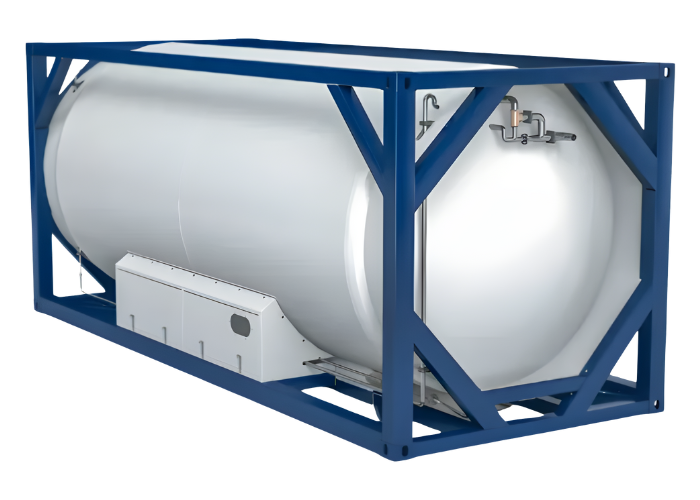
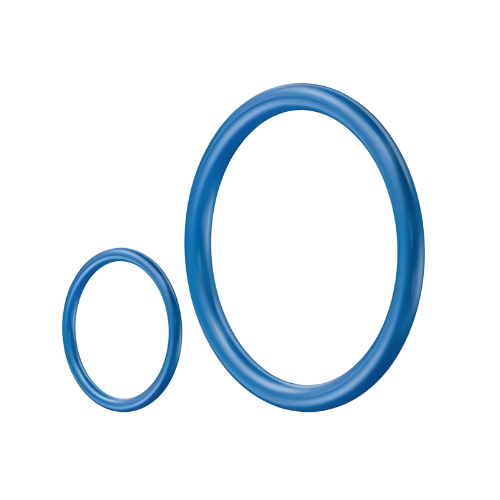
Seals for hydrogen tanks determine whether pressure tanks remain safe, predictable, and efficient throughout their service life. In the field, tanks face high pressure, temperature fluctuations, varying gas purity, and mechanical loads around appendages (boss/valve, PRD/burst-disc) and inspection ports. Design and material errors quickly lead to microleakage, unnecessary emissions, and unplanned downtime. The combination of low permeation, uniform compression, controlled compression set, and smart geometry (think ISO 3601 groove sizes) therefore forms the basis. Where gap width or differential pressure demands it, PTFE back-up rings limit extrusion; in gas service, AED/RGD-resistant O-rings better handle rapid decompression. Those who define specifications and test to the same profiles as in practice (helium, sccm) make performance repeatable from first commissioning to overhaul. In doing so, seals for hydrogen tanks prove their value from commissioning to overhaul.
Around the boss/valve interface, design, material, and assembly come together. Here, O-rings in ISO 3601 groove sizes provide repeatable compression and an easily inspectable fit. In gas service with rapid pressure changes, choose AED/RGD-resistant O-rings to prevent microcracks caused by decompression. Larger gap width or high load? Then PTFE back-up rings limit extrusion and keep sealing pressure stable, even after thermal cycles. Pay extra attention to roughness, runout, and alignment of the boss seat; a small deviation quickly increases local deformation.
With that combination, right compound, right groove, right assembly, seals perform consistently, and you reduce the chance of “weeping” around appendages and PRD/burst disc. With that combination, seals for hydrogen tanks remain durably leak-free around boss/valve interfaces.
Flange and hatch connections require uniform compression across the entire sealing line. Too little clamping force causes microleakage; too much leads to deformation and accelerated compression set. Work with clear torque instructions, flatness/roughness specifications, and a hardness matched to the clamping force. Place measurement points and instrumentation with O-rings in standardized grooves so that measurement and assembly remain repeatable. Helium leak test at sccm level makes performance objectively visible and speeds release. By designing and assembling consistently, flanges and inspection hatches remain predictably tight, even when the tank frequently “breathes” in pressure and temperature. This way, seals for hydrogen tanks keep flanges and inspection hatches predictably tight, even after many cycles.
Tanks in GH₂ applications typically see high static pressure with superimposed temperature cycles (day/night, filling/discharging). Such profiles increase the tendency toward microleakage; low permeation is therefore not a nice-to-have but a design requirement. Choose compounds with proven low permeation and a low compression set, so sealing pressure does not drop after cycles. Validate with helium, more sensitive than H₂ for detection, and define acceptance limits in sccm, per interface. Also document ageing: some materials show measurable drift after months. With route-specific test reports (permeation, compression set, thermal cycling), you prevent surprises in the field and can predict tank performance over time. Especially in these scenarios, seals for hydrogen tanks make the difference between theory and practice.
Extrusion occurs when the elastomer is forced into a gap under high differential pressure; it is a creeping failure mode that often becomes visible only late. PTFE back-up rings provide a hard barrier in the groove, keep the elastomer in place, and stabilize the sealing pressure. In gas service, decompression damage (RGD) is another factor: during rapid pressure drop, microcracks can form. AED/RGD-resistant O-rings minimize that risk and maintain their integrity after pressure shocks, trip events, or rapid regulation. From a design perspective, it helps to control gap width and groove radius, and to dampen temperature peaks. This keeps the connection free from extrusion and repeatably tight, even after thousands of cycles. The result: seals for hydrogen tanks that remain extrusion-free and reliable.
The toolkit for tanks is extensive. O-rings in ISO 3601 groove sizes provide interchangeability and measurable compression; flat gaskets can be useful on larger flanges or hatches. PTFE/PEEK elements offer low friction and high dimensional stability, serving as back-up or support components. The compound choice depends on the environment: EPDM is often logical in water/alkali or cooling circuits around the tank; FKM offers a good balance at 150–200 °C and in various media; FFKM is the safeguard for extreme chemistry or higher temperature. HNBR/AFLAS are relevant when sour components (e.g. H₂S/CO₂ mixtures) are involved. Always link material selection to the intended pressure/temperature profile, required leak limit (sccm), and expected service life. That is why teams choose components and compounds that demonstrably enable seals for hydrogen tanks to perform.
Validation starts with representative setups: identical groove geometry, the same tightening torque, and real load profiles. Test for permeation (helium), compression set, and, where relevant, RGD. Record batch data and post-cure/cleaning details, especially near sensors and PRDs. During operation, monitor trends: a slowly increasing helium leak or higher purge frequency is often the first sign that compression is decreasing. Plan overhauls based on data, not just calendar hours, and inspect grooves for roughness and damage. Traceability pays off: with serial and batch numbers, you can link field behavior back to production. This way, seals in hydrogen tanks remain within specification not only initially but also after years. With data-driven maintenance, seals for hydrogen tanks stay within specification longer.
They reduce damage from rapid decompression in gas service. In boss/valve interfaces and appendages with pressure shocks, these compounds retain their integrity and leak-tightness longer. This way, seals for hydrogen tanks maintain their integrity longer.
When gap width or differential pressure creates an extrusion risk, such as at high-pressure appendages or tolerances on the boss. Back-up rings keep the elastomer in place and stabilize sealing pressure. This way, seals for hydrogen tanks remain mechanically relieved under high loads.
They standardize compression and measurement, enable interchangeability, and speed up validation. That reduces variation between suppliers and lines. As a result, seals for hydrogen tanks are mounted reliably and interchangeably.
Compression set is the permanent deformation after compression. A low compression set helps to maintain sealing pressure and leak-tightness, especially after thermal and pressure cycles. A low compression set ensures that seals for hydrogen tanks retain their sealing pressure.
Set leak criteria in sccm per interface and test with helium for high detection sensitivity. Combine this with material data and endurance testing to substantiate service-life predictions. Clear sccm limits help assess whether seals for hydrogen tanks still meet the requirements.



 Nederlands
  Deutsch