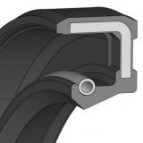
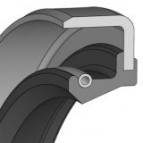
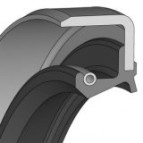
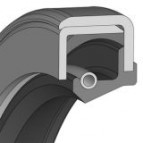
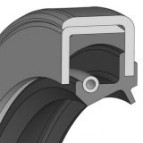
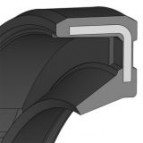
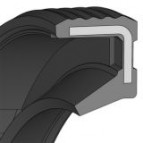
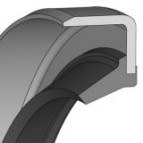
9.391 - 9.408 of 9.408 results
Radial shaft seals are used to seal the space between a rotating shaft and a stationary housing. These seals are also referred to as oil seals or rotary shaft seals. The sealing lip contacts the surface of the shaft and helps prevent oil, grease or another medium from leaking out of the installation. Depending on the profile, the seal can also prevent dust, dirt or splash water from entering from the outside.
As the shaft rotates, the sealing lip provides the dynamic seal. When the machine is stationary, the same lip can provide a static seal between the shaft and the sealing profile. The exact sealing function depends on the shape of the sealing lip and the presence of a garter spring.
The outer casing also has an important function. It provides the fit and static seal between the oil seal and the housing bore. The Dichtomatik range includes rubber-covered, open metal and closed metal designs. This allows the construction to be selected according to the housing, installation conditions and required sealing performance.
The sealing lip of a radial shaft seal contacts the surface of the rotating shaft. This creates a dynamic seal between the moving machine component and the stationary housing. For most Dichtomatik profiles, this sealing function is independent of the direction of shaft rotation.
For profiles including the WA, WB and WC oil seal, a garter spring supports the contact between the main sealing lip and the shaft surface. Other profiles use a springless sealing lip for specific applications. The correct construction is determined by the medium, pressure, circumferential speed, temperature and required sealing performance when stationary.
In addition to the dynamic seal around the shaft, an oil seal must provide sealing along the housing bore. This static seal is provided by the outer casing. Its construction influences the fit, installation and suitability for different media and housings.
The WA oil seal, for example, has a rubber-covered outer casing. The WB oil seal has an open metal outer casing for a precise interference fit. The WC oil seal has a closed metal outer casing with a reinforcing plate. The housing must always comply with the specified tolerance and surface roughness requirements of the selected profile.
The Dichtomatik range of radial shaft seals includes various profile constructions for a wide range of applications. The different designs can be used for sealing rotating shafts, hubs and shaft assemblies. The required construction depends on the function of the seal and the operating conditions within the machine.
The double-acting WAD and WBD oil seals feature opposing sealing lips and are primarily used to keep different media separated from each other. The springless WAO, WAOK and WBO oil seals can be used for sealing against grease and as secondary protection against dust, dirt or splash water.
For applications involving external contamination, designs with an additional protective lip are available. Other profiles are designed for larger diameters, difficult installation conditions, pressure loads, high temperatures or aggressive chemicals. Always consult the individual type page for the exact profile construction and operating limits.
Many Dichtomatik oil seals are designed for moderately demanding applications in general industry. The WA has a spring-loaded sealing lip and rubber-covered outer casing. The WB combines a spring-loaded sealing lip with an open metal outer casing.
When protection against moderate amounts of dust and dirt is required, the rubber-covered WAS or metal WBS oil seal can be selected. In addition to the spring-loaded main sealing lip, these profiles have an additional protective lip. The final choice depends on the housing, medium and operating conditions.
Specific profile constructions are available for special operating conditions. The WASY oil seal has a shortened sealing lip and can be used in pressure-loaded applications such as hydraulic motors and pumps.
The WC and WCS oil seals have a closed metal outer casing with a reinforcing plate. The increased rigidity makes these constructions suitable for larger diameters and difficult installation conditions. The WCP oil seal has a springless PTFE sealing lip for applications including high temperatures, aggressive chemicals, high circumferential speeds, pressure loads, dry running and insufficient lubrication.
The sealing lip of a Dichtomatik oil seal can be designed with or without a garter spring. In the WA, WAS, WASY, WB, WBS, WC and WCS, a garter spring supports the contact between the main sealing lip and the shaft surface.
The double-acting WAD and WBD use spring-loaded, opposing sealing lips to separate different media.
The WAO, WAOK, WBO and WCP have a springless sealing lip. With these designs, the static seal between the sealing lip and shaft may be limited when stationary. Always check whether the selected lip construction is suitable for the application.
A spring-loaded main sealing lip is pressed against the shaft surface by a garter spring. This principle is used in profiles including the WA, WB and WC oil seal. The garter spring supports consistent contact between the sealing lip and running surface. This helps maintain the sealing function while the shaft rotates.
When the shaft is stationary, the contact between the main sealing lip and the shaft provides a reliable static seal. For reliable operation, the sealing material, spring construction and shaft surface must be suitable for the medium, temperature, pressure and circumferential speed.
The WAO and WAOK oil seals have a springless sealing lip and rubber-covered outer casing. The WAOK also has a grooved outer casing. The WBO oil seal combines a springless lip with an open metal outer casing. These profiles can be used for sealing against grease and as secondary protection against dust, dirt or splash water.
The WCP oil seal uses a springless PTFE sealing lip for special operating conditions. With springless profiles, static sealing performance may be limited when stationary.
An additional protective lip helps prevent external dust and dirt from reaching the contact area of the main sealing lip. The WAS and WASY oil seals combine this protective lip with a rubber-covered outer casing. The WBS has an open metal outer casing and the WCS has a closed metal outer casing with a reinforcing plate.
The other types do not have a separate protective lip. With these profiles, the sealing lip contact area remains directly exposed to the operating environment. It is therefore important to check whether a design without a protective lip is suitable for the amount of dust and dirt around the shaft.
A protective lip also contacts the shaft and therefore generates additional friction. This friction can cause an increase in temperature in the contact area. This is particularly relevant at higher circumferential speeds. Protection, speed, lubrication and heat generation must therefore be assessed together.
The WAS, WASY, WBS and WCS oil seals are equipped with an additional protective lip. This lip helps keep moderate amounts of dust and dirt away from the main sealing lip.
The profiles differ in their outer casing design and overall construction. The required design therefore depends on more than the presence of the protective lip. The medium, pressure, diameter and housing bore must also be considered. Consult the relevant type page for the specific operating limits and installation requirements.
The WA, WAD, WAO, WAOK, WB, WBD, WBO, WC and WCP oil seals do not have a separate protective lip.
With these designs, it should be checked whether the main sealing lip is sufficiently protected against the operating environment. A profile without a protective lip may be suitable when there is little external contamination or when another component prevents dust and dirt from reaching the seal. Selection remains dependent on the complete installation situation.
Dichtomatik radial shaft seals are available with different outer casing constructions. The WA, WAD, WAO, WAOK, WAS and WASY types have a rubber-covered outer casing. This supports reliable static sealing in the housing bore.
The WB, WBD, WBO, WBS and WCP types have an open metal outer casing. The WC and WCS have a closed metal outer casing with a reinforcing plate. Each construction has its own characteristics regarding fit, sealing and installation.
The WA, WAD, WAO, WAOK, WAS and WASY oil seals have a rubber-covered outer casing. The WAOK additionally has a grooved outer casing.
The rubber covering can compensate for differences in thermal expansion, for example in light-alloy housings. This construction can also contribute to sealing in housings with greater surface roughness and in split housings. The exact characteristics and operating limits differ by profile.
The WB, WBD, WBO, WBS and WCP oil seals have an open metal outer casing for a firm and precise interference fit.
The WC and WCS oil seals have a closed metal outer casing with a reinforcing plate. The increased rigidity supports installation with larger diameters and under difficult installation conditions. With metal outer casings, take into account the limited sealing performance with low-viscosity and gaseous media and in split housings.
The sealing material has a major influence on the temperature limits, media resistance, circumferential speed and service life of an oil seal. Various Dichtomatik profiles are available in NBR or FKM. The WCP oil seal uses a springless PTFE sealing lip. Not every profile is available in all materials.
NBR is widely used for contact with various mineral oils, greases and hydraulic fluids. Depending on the profile, the material can be used from temperatures as low as -40 °C. Its resistance to ozone, weathering and ageing is limited.
FKM is suitable for higher temperatures and offers good resistance to mineral and synthetic oils, fuels and various hydrocarbons. The material also provides very good resistance to ozone, weathering and ageing.
PTFE combines a broad temperature range with high chemical resistance, low friction and anti-adhesive properties. The WCP can therefore be used with aggressive chemicals, high temperatures, high circumferential speeds, pressure loads, dry running and insufficient lubrication.
Material selection starts with the medium that comes into contact with the sealing lip. Next, check the minimum and maximum operating temperatures. Pressure, circumferential speed, lubrication and duration of exposure also influence suitability.
The general material designation provides only an initial indication. Exact properties may differ between compounds. When two different media must remain separated, the material of a WAD or WBD oil seal must be suitable for contact on both sides. Always assess the complete application and consult the applicable material data sheet where necessary.
Available approvals and certificates depend on the sealing material and the specific compound. A certification therefore does not automatically apply to every oil seal identified by the same general material designation.
When an application requires a specific approval or conformity, this must be checked separately for the selected compound. Consult the current material data sheet for this information. It specifies which certificates and approvals apply to the material. Check this information before selecting or ordering the radial shaft seal.
Each Dichtomatik oil seal has its own operating limits for pressure, temperature and circumferential speed. A WASY oil seal, for example, has a shortened sealing lip for pressure-loaded applications. The WCP oil seal has a PTFE sealing lip for applications including high temperatures, higher circumferential speeds and pressure loads.
The WAO, WAOK and WBO must be used in pressureless installation conditions. The exact limits for the other profiles are specified on the relevant type pages.
The stated values are maximum limits and cannot necessarily all be reached simultaneously. A high temperature, for example, may reduce the permissible speed or pressure. Shaft diameter, lubrication, medium and the presence of a protective lip also influence the practical load capacity. Always assess the complete combination of operating conditions.
Pressure, temperature and circumferential speed influence each other during the operation of a radial shaft seal. When one value approaches its maximum limit, this may reduce the practically permissible load for the other values. Friction at the main sealing lip and any additional protective lip can also generate heat.
Therefore, do not only check whether each individual value remains below its maximum. Also assess the combination of loads throughout the complete service life. The medium, lubrication and shaft surface can further influence the result. The maximum pressure, temperature and circumferential speed for each profile are specified on the relevant type page.
The technical information for a radial shaft seal provides a basis for selection. The performance of the final product can be influenced by dimensions, geometry, installation, manufacturing tolerances and actual operating conditions.
The selected oil seal should therefore preferably be tested with the actual medium and under representative pressure, temperature and speed conditions. During testing, check the sealing performance, friction, heat generation and wear. A complete assessment of the final product remains necessary to determine whether the selected type will operate reliably within the relevant machine or installation.
A correctly designed installation space is important for the performance and service life of a radial shaft seal. For many Dichtomatik profiles, it is recommended that the installation space is designed in accordance with DIN 3760. Exact requirements can differ by type and should therefore always be checked on the relevant product page.
The shaft must be dimensionally accurate, round, clean and free from twists, burrs and other damage. The surface roughness and hardness of the running surface must also comply with the requirements of the selected profile. Sharp edges, threads and keyways can damage the sealing lip during installation and should be covered with an installation sleeve where necessary.
The housing bore must also comply with the specified tolerance and surface quality. This is particularly important for metal outer casings with a precise interference fit. Clean the complete installation space before installation and insert the oil seal straight and without tilting. For pressure-loaded profiles such as the WASY and WCP, also check the product-specific requirements for the installation chamfer and axial support.
Before installation, check the dimensions, roundness, surface roughness and hardness of the shaft. The running surface must be free from scratches, burrs, twists and other damage. These irregularities can damage the sealing lip or create a leakage path.
Also check the diameter, tolerance and surface roughness of the housing bore. A correctly dimensioned bore supports static sealing and ensures that the oil seal remains properly positioned during operation. The specific values differ by profile. Always use the technical requirements on the page of the selected type as the basis for inspection.
Clean the shaft, housing bore and complete installation space before installing the oil seal. Remove dust, dirt, metal chips and other contaminants. Do not pull the seal over sharp edges, threads or keyways. Use a suitable installation sleeve where necessary.
Position the oil seal carefully and straight on the shaft and in the housing bore. The seal must not tilt during installation. Follow the product-specific instructions for lubrication, installation chamfers and axial support. Careful installation helps prevent damage to the sealing lip and deformation of the outer casing.
When selecting a Dichtomatik radial shaft seal, the dimensions, profile construction, material selection and operating conditions must be assessed together. First determine the required inside diameter, outside diameter and width for the shaft and housing bore. Then check which medium must be sealed and which temperature, pressure and circumferential speed occur within the application.
Next, determine whether a spring-loaded or springless sealing lip is required. Also check whether an additional protective lip is needed to keep external dust and dirt away. Then select a rubber-covered, open metal or closed metal outer casing that suits the housing and installation conditions.
Explore the available WA, WAD, WAO, WAOK, WAS, WASY, WB, WBD, WBO, WBS, WC, WCP and WCS types below. Each type page provides the corresponding properties, materials, operating limits and installation requirements.



 Nederlands
 Deutsch